Designing Advanced Interfaces for Learning and Teaching
Workshop at AVI 2026, 8th of June 2026, Venice, Italy
Main contact: Audrey SERNA (audrey.serna@insa-lyon.fr)
The article presenting the workshop is here, and the access to the proceedings is here.
Workshop Program (Monday 8/06 9h00-13h00):
- 8h45 – 9h00: Welcome
- 9h00 – 9h15: Introduction words (Audrey Serna)
- 9h15 – 9h45: Opening presentation: Ludimoodle, a case study // Elise Lavoué & Audrey Serna
- 9h45 – 11h: Presentations (10 minutes per presentation)
- Session 1 // Novel approaches, tools, and frameworks to support the design of TEL systems – Augmented & Mixed Reality
Long Paper 01 // Iza Marfisi, Sebastian Simon, Sébastien George, Mohamed Hamza Falih, Mohamed Oussama Seddini, and Mohamed Ez-Zaouia. MIXAP: Technical and Conceptual Foundations for a Mixed Reality Authoring Tool in Education
Long Paper 02 // Pratishtha Pratishth. HapTechBoard: Haptically Grounded AR Letterboards for Inclusive Spelling Practice.
-
- Session 2 // Novel approaches, tools, and frameworks to support the design of TEL systems – multimodal learning analytics and reflective learning environments
Long Paper 03 // Quentin Vantrepotte, Mickaël Causse, and Cyril Camachon.
An Instrumented Self-Regulated Learning Environment for Adaptive Training of Visual Scan Strategies in Pilot Training.
Long Paper 04 // Alina Glushkova and David Arnaud. 2026. From Motion Analysis to Motion Learning: Interface Mediation for Embodied and Vocational Skill Training.
-
- Session 3 // Regarding adaptive, inclusive, and AI-enhanced learning interfaces
Long Paper 05 // Ben Steichen, Shashikala Mahadevappa, Maribel Gershman, Miguel Geronimo, Alyssa Kermad, Kathleen Stoehr, and Silvia Figueira. Math-Language Minigames: Helping Bilingual Children Learn Mathematics by Closing the Language Gap.
Short Paper 06 // Fra Cipelli and Viktor Gardelli. Social Robots as Adaptive TEL Interfaces for 2e Learners: A Research Agenda.
- 11h – 11h30 : break
- 11h30 – 12h30: Interactive discussion on the future great challenges
- 12h30 – 13h: Discussion on next actions
Objective
The goal of this workshop is to present an overview of ongoing research on innovative and AI-enhanced Human–Computer Interaction (HCI) for teaching and learning. The workshop focuses on how emerging interaction paradigms, such as adaptive interfaces, multimodal interaction, and game-based learning, can support richer, more engaging, and more inclusive Technology-Enhanced Learning (TEL) experiences. The discussion will be framed around three research questions that remain insufficiently explored:
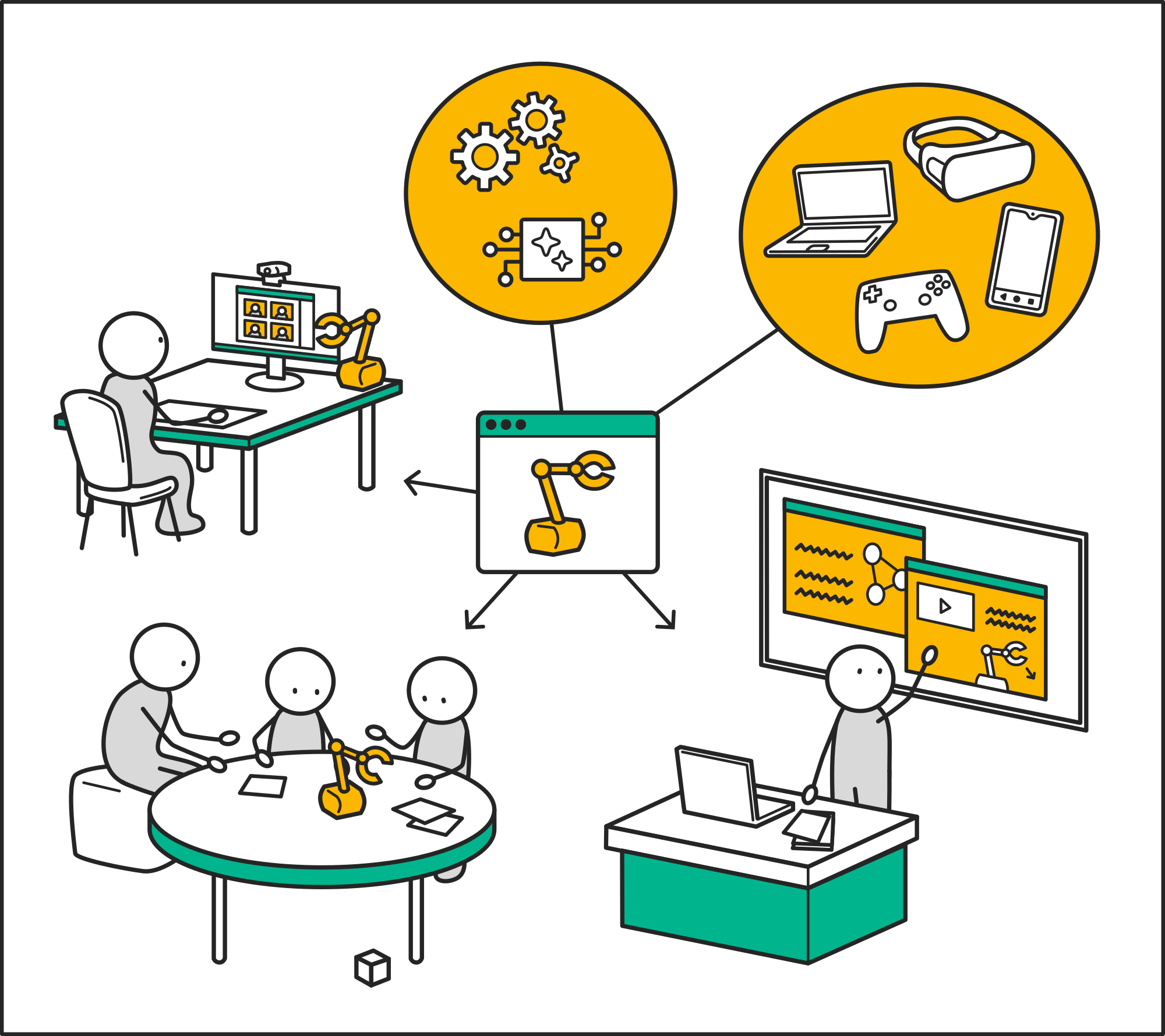
1. How can we facilitate the design and evaluation of Technology-Enhanced Learning (TEL) systems that promote effective learning, quality of experience, well-being, and inclusivity with innovative HCI?
2. How can we adapt TEL systems to the complexity of educational environments?
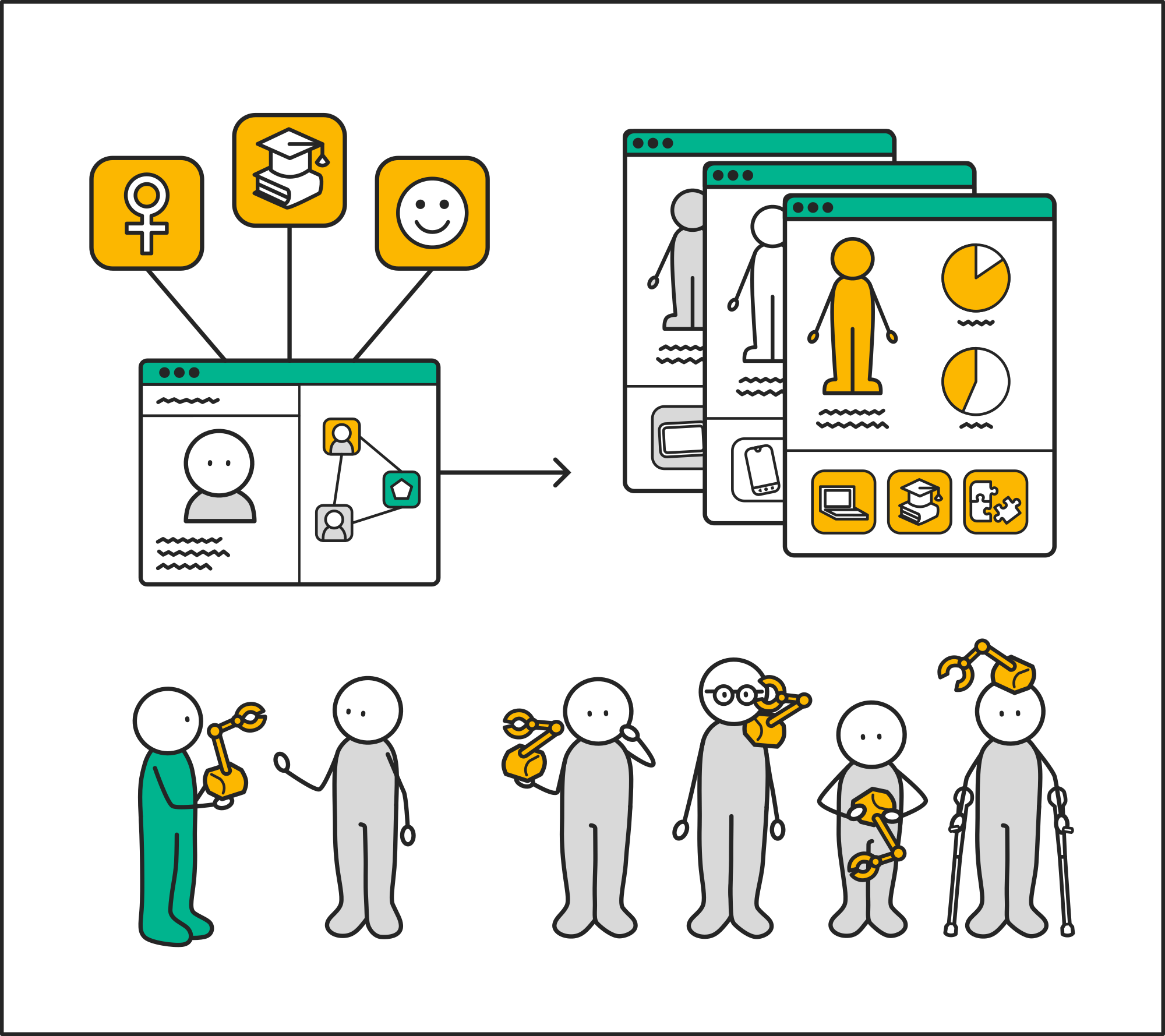
3. How can we model users in TEL systems to take into account their diversity (age, educational level), their preferences and constraints in HCIs?
After their presentations, each researcher will be invited to ptration of their work and contribute to creating a mind map illustrating current trends and future directions related to these 3 questions. The ultimate goal is to bring participants together to produce a publication on the field’s future challenges and opportunities.
List of Topics:
Multimodal Interaction, Augmented Reality, Virtual Reality, Adaptive and Context-Aware Interfaces, Intelligent Interfaces, Computer-Supported Cooperative Work, Computer-Supported Cooperative Learning, Learning Ecosystems, Professional Training Ecosystems, Game and Play Ecosystems, AI for Technology-Enhanced Learning, Multimodal learning analytics.
Types of contribution accepted:
We will be happy to receive: work in progress, quantitative or qualitative studies, position papers, preliminary surveys, prototypes with early evaluation, which contribute to the research questions raised in the objective of the workshop.
Workshop Format:
The workshop will feature one invited keynote talk, followed by 10-minute flash presentations of 5 to 8 papers selected through a rigorous peer-review process. Authors are encouraged to bring the devices/systems for a live demo if possible.
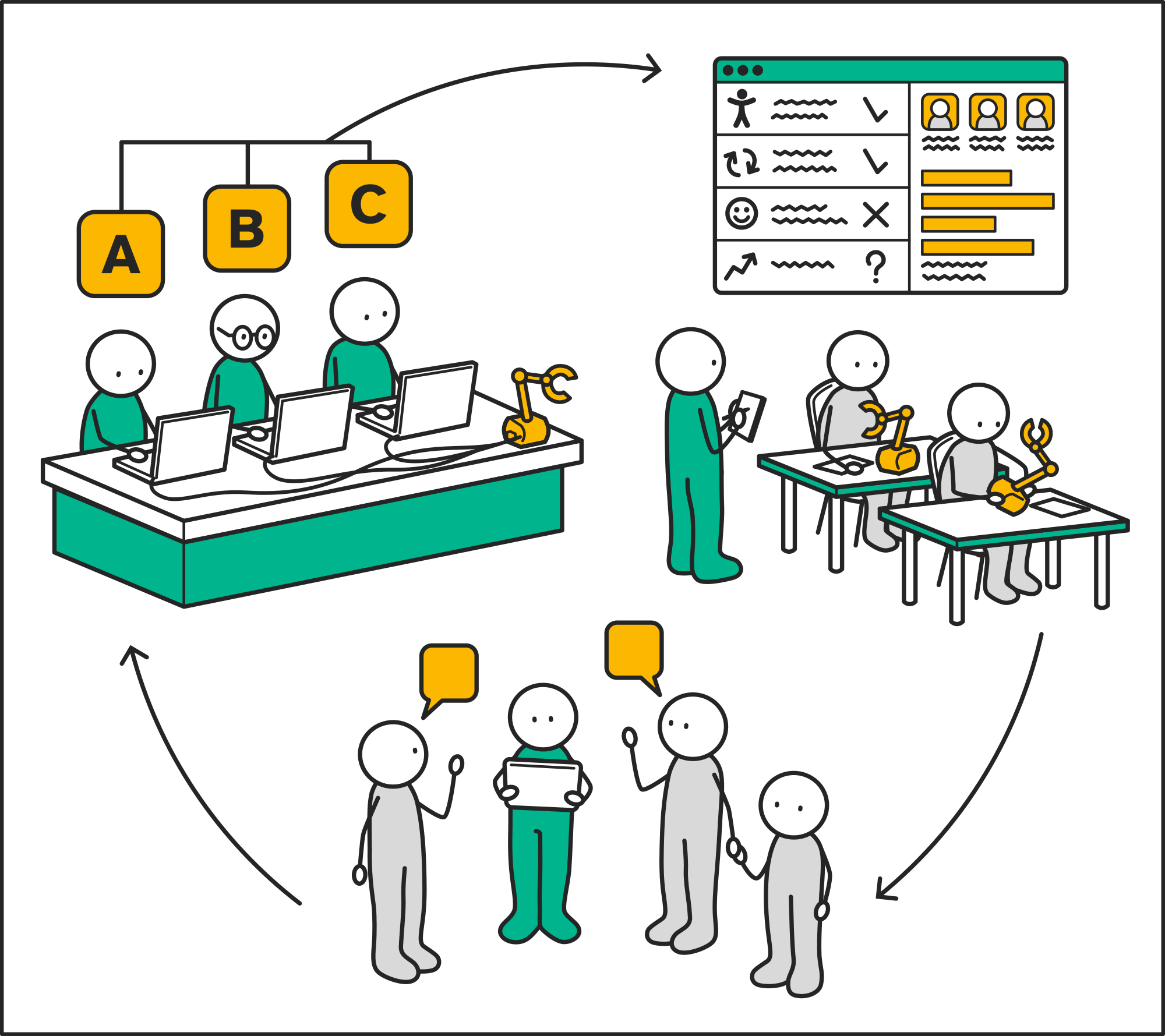
After the presentations, participants will engage in a World Café–style interactive session structured around the w central research questions. During this session, small rotating groups will collaboratively discuss challenges, share methodological insights, and sketch future research directions on AI-enhanced interaction, multimodal and game-based learning, and learner modelling across diverse educational contexts. The session will conclude with a collective synthesis and identification of actionable next steps, including the preparation of a joint publication about the research agenda.
Organizers:
Audrey SERNA, INSA de Lyon (France), Antonio BUCCHIARONE, University of L’Aquila (Italy), Iza MARFISI, Le Mans Université (France), Sebastian SIMON, Copenhagen University (Denmark), Arnaud PROUZEAU, Université Paris-Saclay (France), David BERTOLO, Université de Lorraine (France), Elise LAVOUÉ, Université Jean Moulin Lyon 3 (France), Alina GLUSHKOVA, Mines Paris (France).
Submission procedure
- Format: 6 to 8 page article (excluding references) using the ACM single-column submission template
- Language: English
- Presentation mode: oral presentation of 10-15 minutes
- Submission: Send your proposals to audrey.serna@insa-lyon.fr
Important Dates
- Submission date for contributions to the workshop: March 29th, 2026
- Notification date for contributions to the workshop: April 10th, 2026
- Worksop : 8th or 9th June 2026
Workshop Proceedings:
The papers selected for the workshop will be published in an open-access proceedings platform such as CEUR Workshop Proceedings or HAL publication platform (see example of previous proceedings for a workshop organized in France : https://inria.hal.science/EIAH2025-EDUIHM/) and on the workshop website.
Workshop History:
This workshop will be the latest of a series of annual workshops held in France and organized by the national HCI for Education research group on innovative Human-Computer Interactions for teaching and learning (https://eduihm.afihm.org/). This research group has existed for almost 10 years and has managed to federate a large community of researchers with various backgrounds (computer science, educational scenes, IHM, VR…). Although this community is mainly French, it also welcomes French-speaking researchers for Belgium, Canada and Switzerland. This AVI workshop’s main goal is to further expand this network among the international HCI community and connect researchers working on similar topics. In this spirit, the workshop also seeks to connect with emerging European initiatives such as the EUGAME COST Action proposal, which aims to build a transnational community around game-based learning.
Organizers’ Bios:
- Audrey SERNA is an associate professor at INSA de Lyon (France) and co-leader of the SICAL research team of LIRIS combining HCI and TEL. She conducts research on designing engaging, supportive, and adaptive interactive systems. She coordinated several projects dedicated to developing immersive serious games and gamified environments for learning. She is also co-manager of the national HCI for Education research group.
- Antonio BUCCHIARONE is an associated professor at University of L’Aquila (Italy). He specializes in adaptive systems, motivational digital systems using gamification, and the design and development of educational tools. His research focuses on models and tools for adaptive (collective) systems, modeling and development languages for motivational digital systems, and educational tools supported by and based on Model-Driven Engineering. Dr. Bucchiarone has contributed to numerous national and European R&D projects, including the Erasmus+ project ENCORE. He is a Senior Member of IEEE and Associate Editor for several journals, including International Journal of Serious Games, IEEE Transactions on Games, IEEE Software, Journal of Object Technology (JOT), and IEEE Technology and Society.
- Iza MARFISI is a full professor at Le Mans Université (France). She is also the head of Technology-Enhanced Learning (TEL) team of LIUM and has led more than 8 national and international projects related to HCI for learning. She is also co-manager of the national HCI for Education research group.
- Sebastian SIMON is a postdoctoral researcher at the University of Copenhagen (Denmark) in the department of Psychology. He investigates human-centered generative AI in situated collaborative learning settings and runs international transdisciplinary research groups around topics such as AI for qualitative research, Computer-Supported Collaborative Learning (CSCL) and postdigital research in education.
- Arnaud PROUZEAU, is a researcher at Inria Saclay in France in the ILDA team. His main expertise is in the exploration of visualization with tangible interfaces, virtual and augmented reality, and collaborative educational systems. He led Monash University’s Cognitive Building Initiative in collaboration with Honeywell, aiming to integrate immersive analytics and machine learning to support building management. Currently, he is leading the ‘ICARE’ project, a multidisciplinary initiative focusing on the design of collaborative environments for hands-on educational activities. He is also co-manager of the national HCI for Education research group.
- David BERTOLO is an associate professor at Université de Lorraine (France) in the MINA team of LCOMS. He conducts research on Tangible User Interfaces applied to education and learning. His research focuses on developing and assessing user-centered interaction models that can take into account cognitive learning processes and diverse pedagogical models. Currently, he is leading the THERAPEUTIC project, focusing on gamified incentivizing tangible interfaces for therapeutic patient education. He has been a member of the steering committee of the national HCI for Education research group since 2018.
- Elise LAVOUE is a full professor at Université Jean Moulin Lyon 3 (France) and head of the SICAL research group within the LIRIS lab. Her research interests include adaptive gamification, user engagement and multimodal learning analytics in the fields of TEL and HCI. She has authored or co-authored over 120 publications in these areas. She served as general co-chair (CSCL’19), organizing chair (EC-TEL’16), and program committee co-chair (EC-TEL’17).
- Alina GLUSHKOVA, Mines Paris (France) focuses her research on capturing and analyzing human movement performed in professional context (e.g., industry, crafts) to design interactive systems that support the learning of professional gestures and the acquisition of high-dexterity motor skills. She develops innovative interaction mechanisms based on augmented sensorimotor feedback. She has contributed to numerous EU and national research projects, advancing the preservation and transmission of manual know-how.
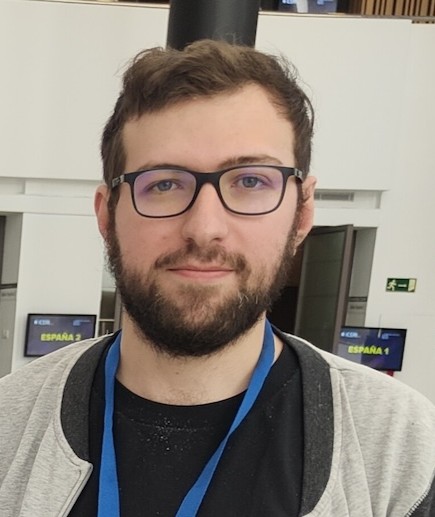
 Sebastian SIMON is a postdoctoral researcher in the field of Computer-Supported Collaborative Learning (CSCL), currently employed at the